
What a Class Period Actually Looks Like at a VR School
What does a school day look like when the classroom is a headset? Here is the rhythm of one class period at Virtual Horizons: live class with a licensed teacher, 20 to 30 minutes inside the lesson, then independent work, then the next subject.
August 6, 2026 | 3 min read
At Virtual Horizons Charter School, this is not just a virtual reality headset. It is our students’ ticket to the universe.
While other online schools stick to screens and scrolls, we bring learning to life in virtual reality. Here the classroom is not confined by four walls. It stretches across the galaxy.
That is the big version. Here is the practical one: what a single class period actually looks like.
Students learn live, together
In grades 4 through 8, students join their teachers and classmates synchronously, meaning they are learning live and together in a fully immersive VR environment. Grades 9 through 12 work at their own pace, on a flexible model with both synchronous and asynchronous options.
Either way, students rotate through their subjects just like an in-person school, but in ways that are anything but traditional.
Twenty to thirty minutes inside the lesson
A typical class period includes students spending 20 to 30 minutes inside VR, fully immersed in their lesson. The remaining time, they work independently or in small groups, completing assignments through our learning management system or even offline.
Then they rotate to the next subject. Math, science, social studies, plus Spanish in grades 7 through 12: the same subjects, the same school day, a different way in.
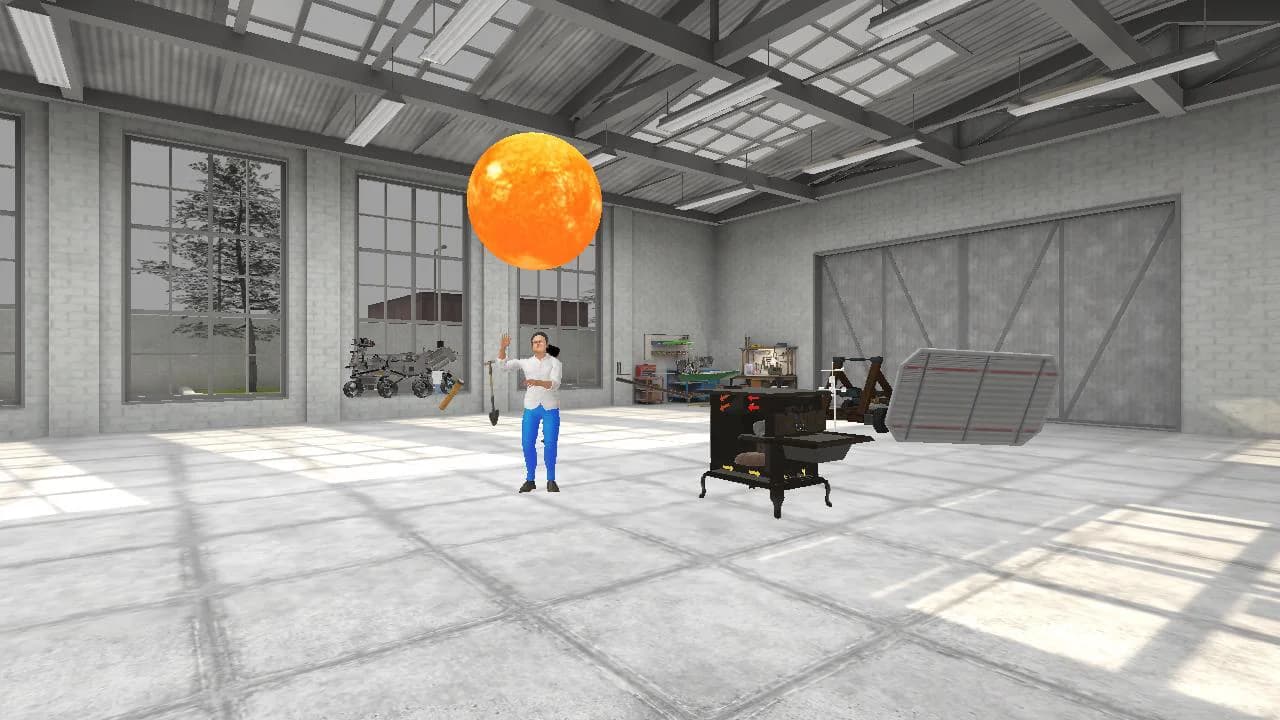
The teacher is in there with them
Our licensed teachers do not just lecture. They guide, lead, and explore right alongside students, whether that is orbiting Saturn, exploring the inside of a cell, or walking through history in real time.
That is the part that is hard to picture from outside a headset. The teacher is not a face in a grid. The teacher is standing next to your student, looking at the same thing your student is looking at.
What it sounds like
In one class, students swam through a coral reef. The questions came fast. How can that fish swim through coral? Isn’t coral like, doesn’t the coral cut you? Why are the sharks over there by the rocks in the dark? The teacher turned every one of them into the next question.
In another, a Utah geography lesson turned into a conversation about their own state. Is Salt Lake big? Is Ogden big? Is St. George big? Are Helper and Price big? Are they growing?
That is the part no lesson plan can schedule. Curiosity shows up when the subject is standing right in front of you.
Why we teach this way
Research on virtual reality learning suggests that students learn faster and remember better. As we understand that research, it is because VR encompasses all of the senses. It is fully immersive, and it engages emotion, balance, and movement. Combining all of these creates stronger connections in the brain to the learning.
It might be a virtual platform, and students are learning from their homes, but we are creating a real sense of community. There is something about being in the virtual world together that makes you feel connected with the people you are learning with. It is not people sitting behind a computer watching a little screen. You are really there with people.
At Virtual Horizons, the headset literally becomes the classroom, but the classroom becomes the universe.
Grades 4 through 12. Tuition-free. Anywhere in Utah. The 2026–27 school year starts Monday, August 17.
See the rest of the day
That was one class period. The whole school day is laid out hour by hour: the schedule, the independent work, the breaks.